Abisko and the northern lights' best seat in Sweden
Perched high above the Arctic Circle near Lake Torneträsk, Abisko National Park combines century-old conservation with a rare microclimate that offers world-class northern lights viewing.
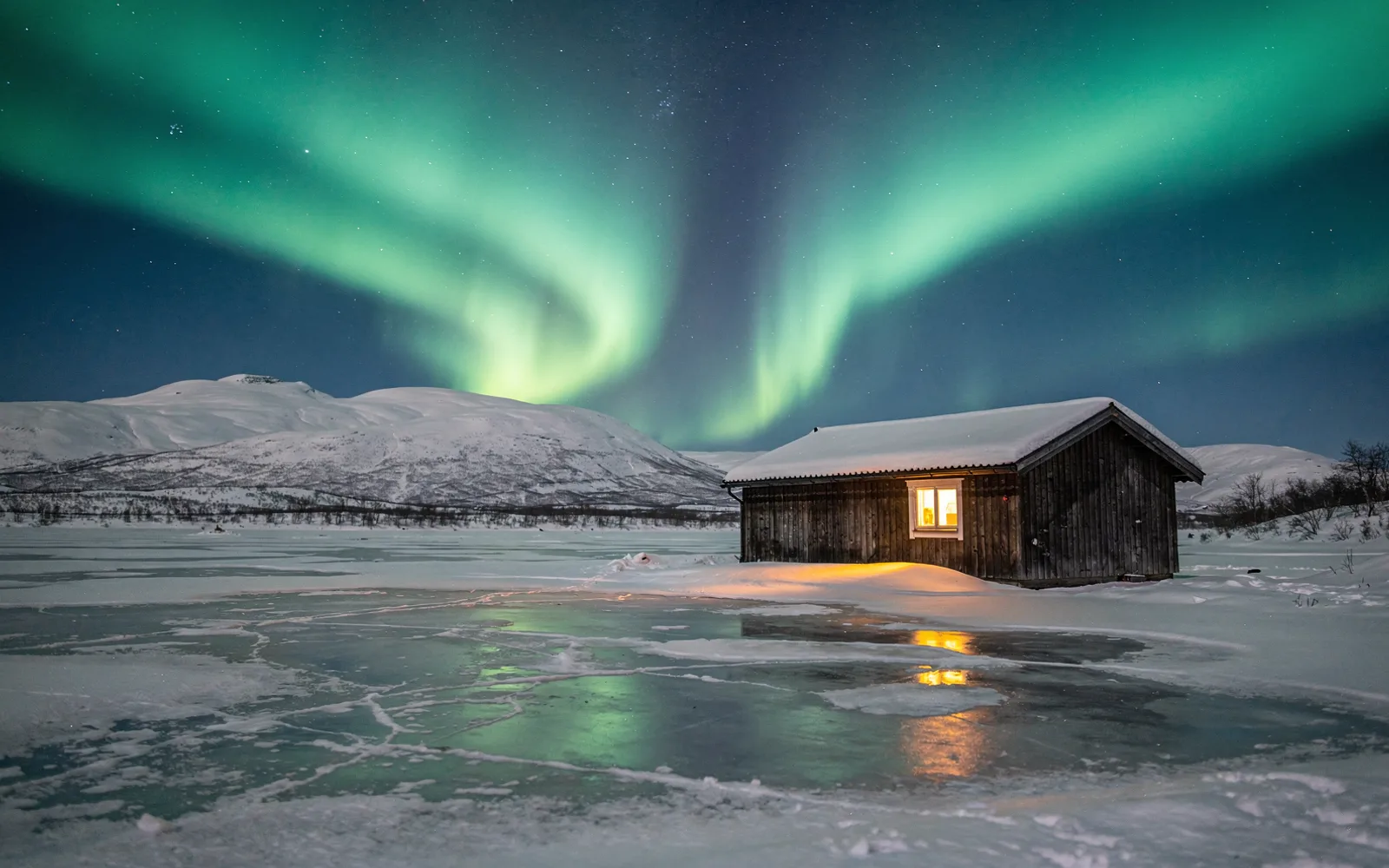
Illustrative image.
A sanctuary of Arctic nature
High in northern Sweden, well north of the Arctic Circle, lies an expanse of pristine wilderness that has welcomed observers of the night sky for more than a century. Established in 1909, Abisko National Park was among the very first national parks created in Europe, formed to preserve a distinctive alpine environment in its natural state. Today, the park remains a benchmark of Swedish conservation, offering visitors an intimate connection to vast subarctic landscapes.
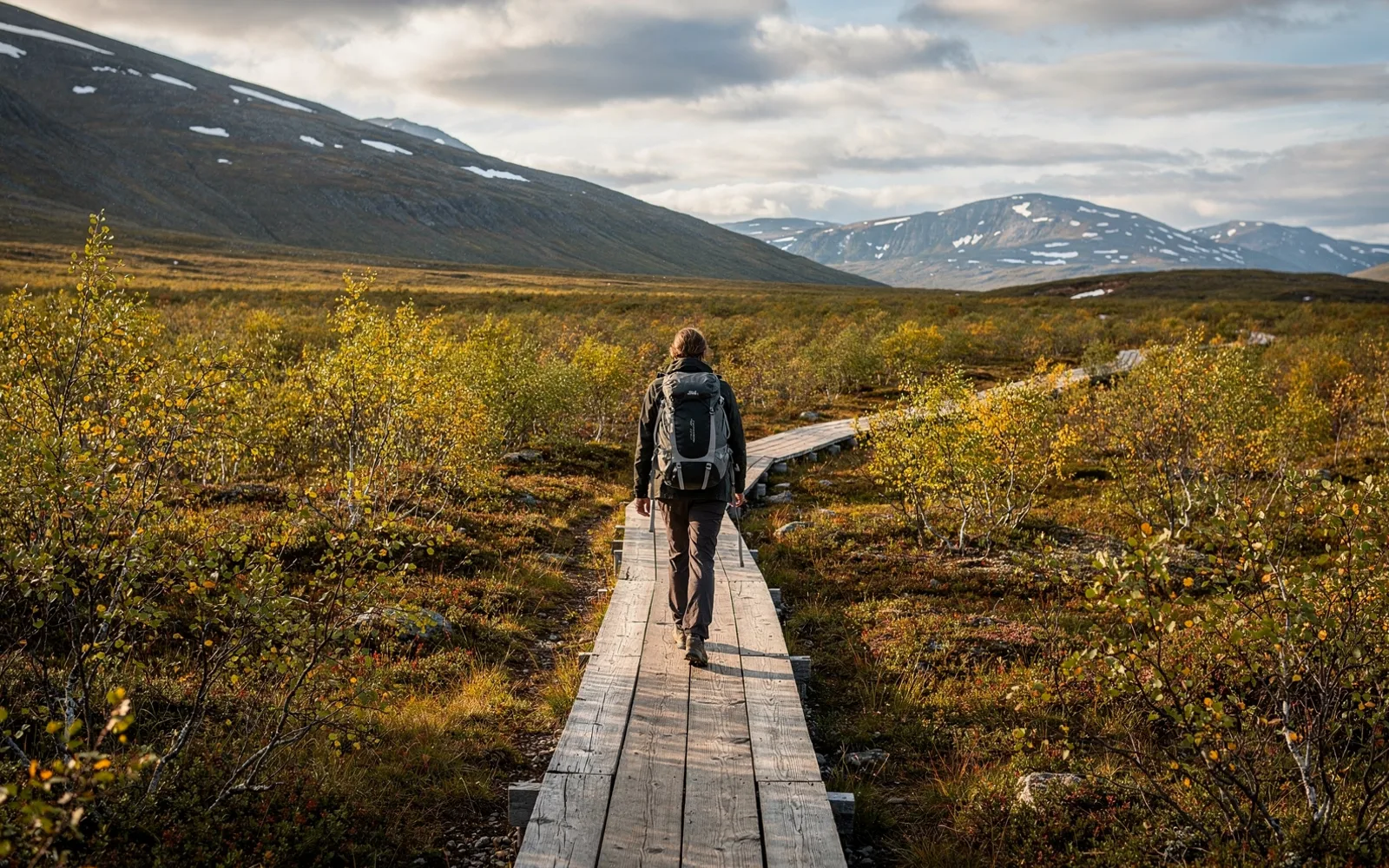
The park stretches south from the southern shore of Lake Torneträsk, one of the largest and deepest freshwater lakes in Sweden. Towering birch forests, clear river canyons, and sweeping mountain ranges frame the horizon in every direction. While many visitors arrive drawn by the promise of auroral displays dancing overhead, the terrain itself holds quiet wonder during every season.
The science of the blue hole
Experiencing the northern lights requires two fundamental ingredients: solar activity and clear, dark skies. While solar particles stream steadily toward the polar regions, cloud cover often obscures the view across much of northern Scandinavia. Abisko, however, benefits from a remarkable natural phenomenon known among meteorologists and stargazers as the blue hole.
Surrounded by protecting mountain ridges, the valley around Abisko experiences a unique local rain shadow. Prevailing westerly winds carrying moist air from the Atlantic Ocean are forced upward over high peaks, shedding their moisture as rain or snow before reaching the lake basin. By the time the air descends over Abisko and Lake Torneträsk, it warms and dries, regularly tearing open cloud layers and revealing an open patch of starry sky even when neighboring valleys are blanketed in gray mist.
A quiet vantage point on Mount Nuolja
To gain the best perspective on this celestial theater, observers often make their way up Mount Nuolja. Here, at an elevation of roughly nine hundred meters above sea level, sits the Aurora Sky Station, an observation facility dedicated to the study and enjoyment of the night sky. Access to the station comes by way of a slow, quiet chairlift ride that carries visitors steadily up through the crisp mountain air.
The chairlift journey itself provides a memorable transition, taking riders away from any faint village lights below into near-total darkness. Upon reaching the station, guests step out onto an open-air viewing terrace that looks out across the broad expanse of Lake Torneträsk and the sweeping valley below. Inside, exhibits explain the physics of geomagnetic storms, while guides share insights into the delicate atmospheric science that transforms solar wind into luminous green and violet curtains.
Shifting seasons of light and dark
Life in this extreme latitude follows dramatic seasonal rhythms that shape the park throughout the year. Around December, Abisko enters the polar night, a period when the sun stays beneath the horizon for weeks at a time. Rather than complete blackness, midwinter days bring soft twilight hues of deep blue, rose, and amber that linger for hours over snow-covered birch trees, followed by long, dark nights ideally suited for spotting the aurora borealis.
As the earth tilts toward summer, the calendar swings to the opposite extreme, welcoming the continuous glow of the midnight sun. From late spring through midsummer, daylight never fades, turning the mountain slopes into a haven for hikers, botanists, and wildlife observers. Yet it is the return of autumn and winter, with crisp starlight and the gentle hum of the Mount Nuolja chairlift, that restores Abisko as one of the world's most reliable sanctuaries for witnessing the northern lights.
Something not right? Write to desk@veltrixnews.com. Corrections are added openly at the end of the story. Read our editorial standards.