Stockholm's subway, the longest art gallery you can ride
Stretching across roughly 110 kilometers of bedrock, the Stockholm metro system transforms daily transit into an expansive, peaceful cultural tour through inspiring creative spaces.
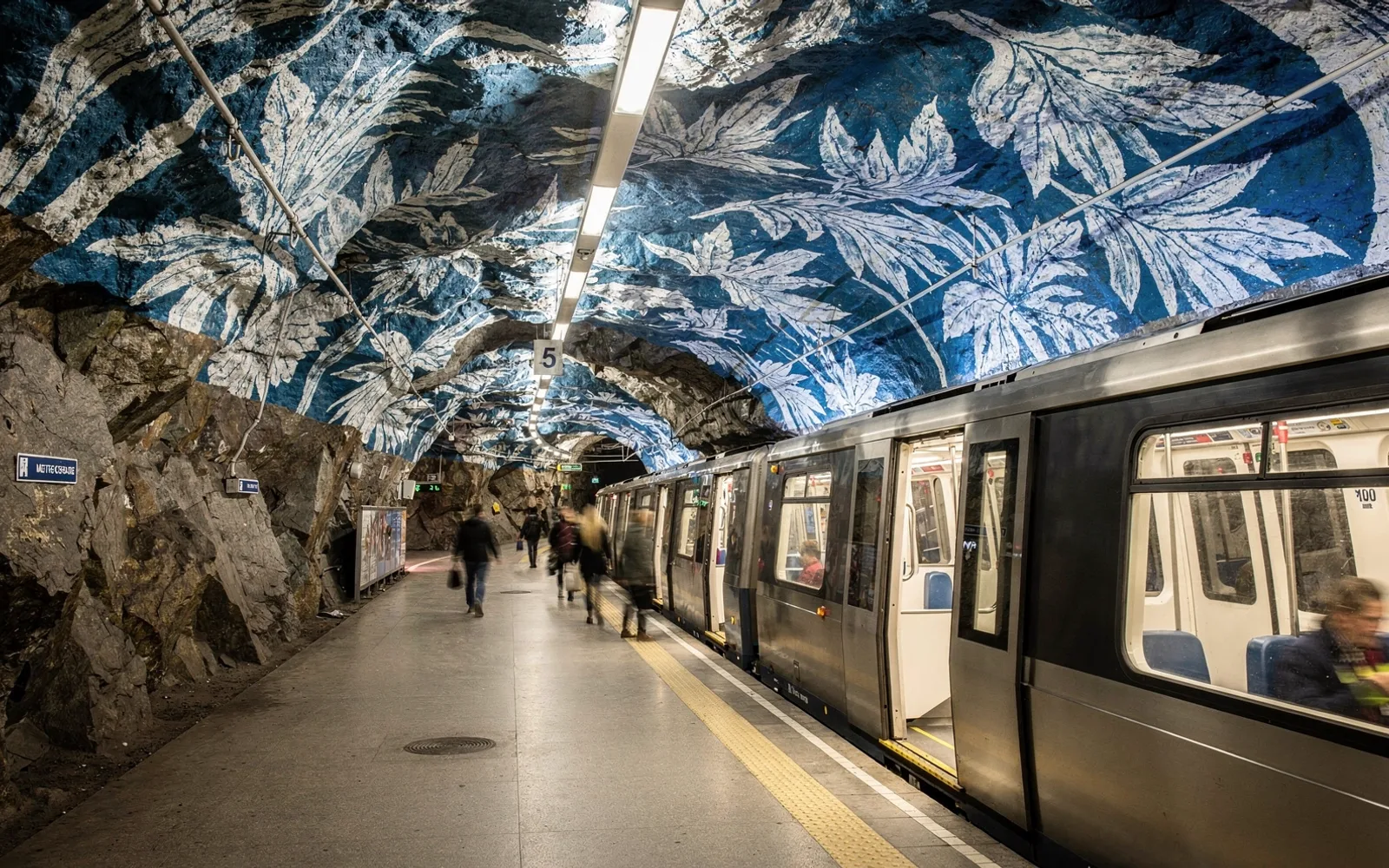
Illustrative image.
A subterranean landscape
Stockholm's tunnelbana is often celebrated as the longest art gallery in the world. Stretching across roughly 110 kilometers, the network weaves beneath the city, connecting island neighborhoods and mainland suburbs. More than 90 of the system's 100 stations feature original creative works, turning everyday commutes into visual discoveries. Travelers stepping onto platforms encounter vivid murals, sculpted tiles, and painted stone instead of sterile transit corridors.
The tradition of integrating public creativity into the metro began in the 1950s, when artists sought to bring culture directly into daily routines. Planners and creatives envisioned underground spaces that felt inviting and distinct rather than purely utilitarian. Over the decades, generations of painters, sculptors, and designers have contributed their talents to the expanding rail lines. Today, the platforms reflect a gradual collection of visual ideas developed over more than half a century.
Carved into living stone
One of the defining characteristics of the Stockholm network is its unique structural design. Many stations were blasted directly into the ancient bedrock during construction, leaving the natural contours of the stone exposed. Instead of concealing the rough rock faces behind smooth panels, engineers coated the cavernous surfaces in sprayed concrete. This technique produced dramatic, cave-like environments where natural geology and intentional design meet.
The irregular, vaulted ceilings give each underground hall an organic rhythm that alters the perception of subterranean travel. Shadows play across the uneven textures, and the acoustics soften the rumble of approaching trains. These vast rocky chambers became ideal canvases, allowing creatives to treat entire platform vaults as unified installations. Commuters wait for their trains beneath ceilings that evoke geological grottos, illuminated by carefully arranged ambient lights.
Iconic colors and underground gardens
Among the most recognized stops is T-Centralen, the central hub where the system's different lines converge. Down on the blue line platform, the cavernous white rock is covered in massive silhouettes of blue leaves and creeping vines. The soothing color scheme was chosen to provide a calm sanctuary amid the busiest intersection of the network. Further down the platform, stylized silhouettes of workers honor the builders who blasted through the solid stone to create the tunnels.
North of the city center, Solna centrum presents an entirely different visual atmosphere with its saturated red and green palette. A vivid crimson evening sky looms above dense spruce forests painted directly onto the sweeping rock walls. The station offers a portrait of Swedish landscape themes, contrasting lush wilderness with scenes of expanding communities. Further along the network, Kungsträdgården resembles an underground archaeological retreat, complete with classical statues, relieflike details, and rich green patterns that echo the historic park situated directly overhead.
Exploring the network
The subterranean collection functions as an accessible cultural resource woven into the fabric of urban mobility. Commuters and visitors alike can embark on informal self-guided tours simply by stepping off trains at various stops along the route. Because each station has its own character, shifting between lines offers a continuous sense of exploration. The underground environment remains comfortable throughout every season, protected from winter chill and summer rains.
To help riders learn more about the creative details around them, transit operator SL organizes guided art walks during the summer months. These walking tours are led by knowledgeable guides who highlight the historical context, materials, and artists behind selected stations. Groups move from one platform to another by train, pausing to examine hidden motifs, mosaic patterns, and carved details that casual passengers might easily overlook. It is a quiet celebration of public design, reminding everyone that inspiring spaces belong right at the heart of shared daily life.
Something not right? Write to desk@veltrixnews.com. Corrections are added openly at the end of the story. Read our editorial standards.