Midsommar: why Sweden dances around a pole in June
Every June, communities across Sweden welcome the longest days of the year with leafy poles, lively circle dances, fresh summer foods, and timeless floral traditions.
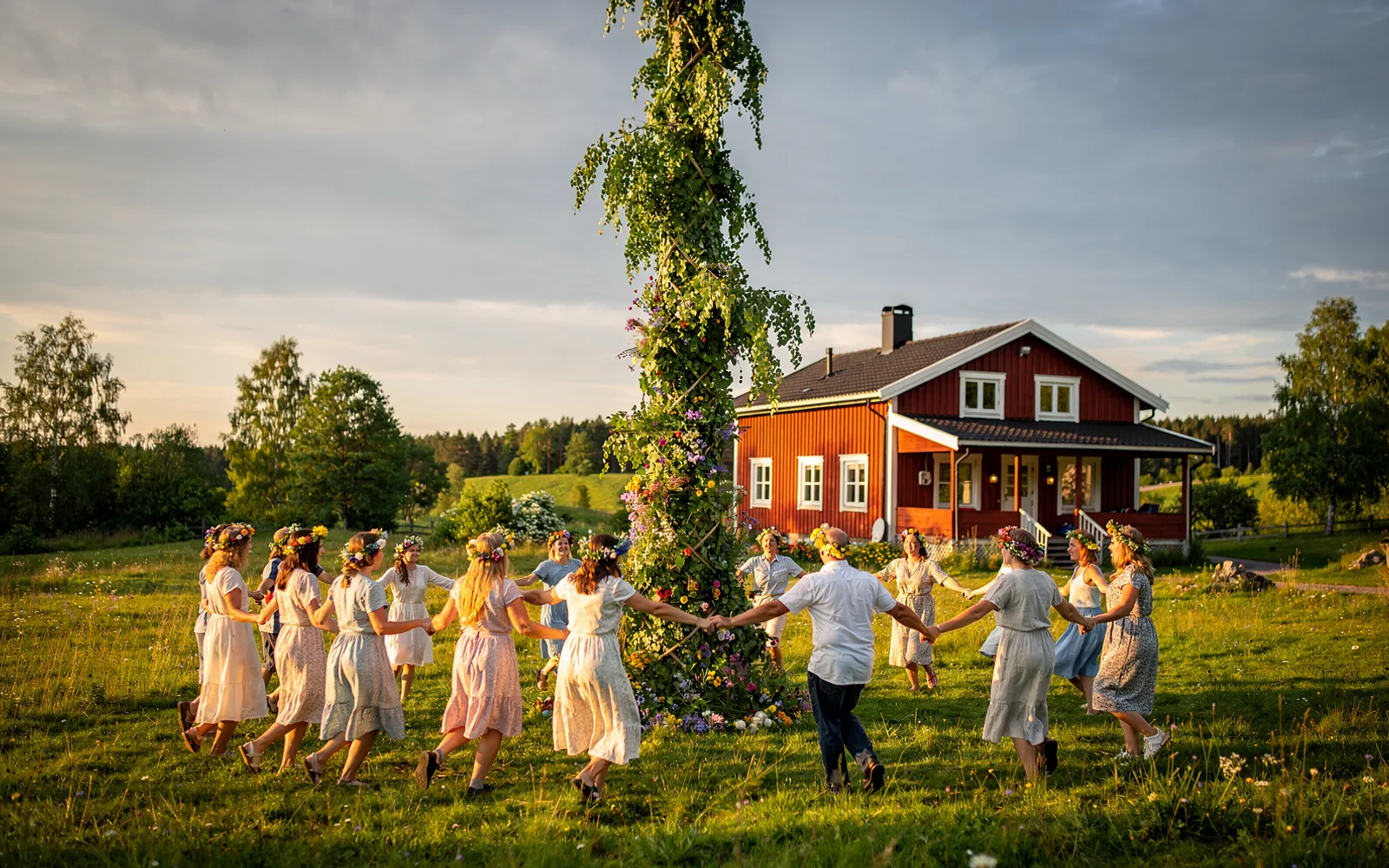
Illustrative image.
A quiet exodus to the countryside
Midsummer Eve takes place each year on the Friday that falls between June 19 and June 25. As the date approaches, cities across Sweden grow remarkably quiet as residents pack their bags and head toward summer houses, coastal villages, and rural family homes. The desire to mark this occasion close to nature is deeply rooted across generations, turning quiet islands and countryside meadows into welcoming centers of life.
The timing lines up closely with the astronomical summer solstice, a moment when northern skies barely darken at all. Sunlight stretches across the late evening hours, creating a luminous twilight that naturally encourages outdoor gatherings to continue late into the night. It is a seasonal turning point that marks the true arrival of summer, offering an optimistic moment of rest.
For travelers, the sight of empty streets in major cities contrasts with the vibrant energy found in rural villages. Communities prepare their village greens days in advance, mowing grass and setting up communal tables for neighbors. This collective journey outward reflects a shared cultural instinct to pause regular routines and embrace the fleeting beauty of the Nordic summer.
Raising the green pole
At the center of almost every celebration stands the midsommarstång, also widely known as the maypole. Hours before festivities begin, neighbors gather armfuls of birch boughs, leafy green branches, and colorful wildflowers to dress the tall wooden frame. Raising the decorated pole is a collaborative effort that relies on steady teamwork, long wooden props, and enthusiastic encouragement from onlookers gathered around the field.
Once the leafy structure stands securely upright against the sky, people of all ages link hands to form concentric rings around the base. Musicians strike up traditional folk tunes on accordions and fiddles, setting an energetic rhythm that guides the circling dancers. Simple steps and shared choruses bridge generational divides, drawing toddlers, parents, and grandparents into the same circle.
Among the most famous and cheerful of these dances is Små grodorna, which translates directly to the little frogs. Dancers hop around the pole while miming frog ears and tails, shedding self-consciousness in favor of lighthearted humor. The performance is joyful and welcoming, reminding participants that Midsummer is fundamentally about communal delight without pretension.
Flavors of the early harvest
Food plays an indispensable role during the celebration, centered on seasonal ingredients that highlight simple and honest flavors. Long tables arranged under the open sky are laden with bowls of steaming new potatoes, freshly dug from local soil and boiled with sprigs of dill. Sour cream and fresh chives complement the tender potatoes, creating a staple combination familiar to every household.
Alongside the potatoes, jars of pickled herring appear in an impressive variety of sweet and savory marinades. Selections flavored with mustard, dill, and onions showcase a culinary preservation tradition that has endured for generations. Crispbread, regional cheeses, and butter complete the lunch spread, inviting guests to sit together and enjoy a relaxed meal that lasts for several hours.
The festive meal traditionally concludes with the most anticipated sweet treat of the early summer: fresh local strawberries. Served simply with cold milk or cream, or layered into a soft sponge cake topped with whipped cream, the berries are a national favorite. Their arrival coincides neatly with the holiday, serving as an edible symbol of sunny days ahead.
Crowns of flowers and midnight folklore
Dressing for Midsummer is closely tied to the natural world, visible most clearly in the tradition of crafting flower crowns. Morning walks through nearby meadows and gardens yield wild daisies, clover, buttercups, and leafy sprigs. These botanical treasures are woven carefully around flexible wire or green twine, creating fragrant wreaths that people wear atop their heads throughout the festivities.
As daylight lingers past midnight in a gentle glow, traditional folklore adds a touch of quiet romance to the evening. An enduring custom suggests that picking seven different kinds of flowers and placing them beneath a pillow brings dreams of a future partner. To ensure the magic works, the blossoms must be gathered in total silence and kept secret until morning.
Whether observed through lively games on the lawn, the scent of crushed dill, or seven flowers tucked beneath a pillow, the holiday embodies a profound appreciation for nature. It provides an enduring connection to the seasons, celebrated with open hearts across the countryside year after year. The simple ritual of gathering outdoors honors the sunlight and leaves lasting memories for everyone present.
Something not right? Write to desk@veltrixnews.com. Corrections are added openly at the end of the story. Read our editorial standards.