The three-point seatbelt, a Swedish idea shared with everyone
When Swedish engineer Nils Bohlin designed the modern three-point seatbelt in 1959, his employer chose to give the life-saving design away to the entire world.
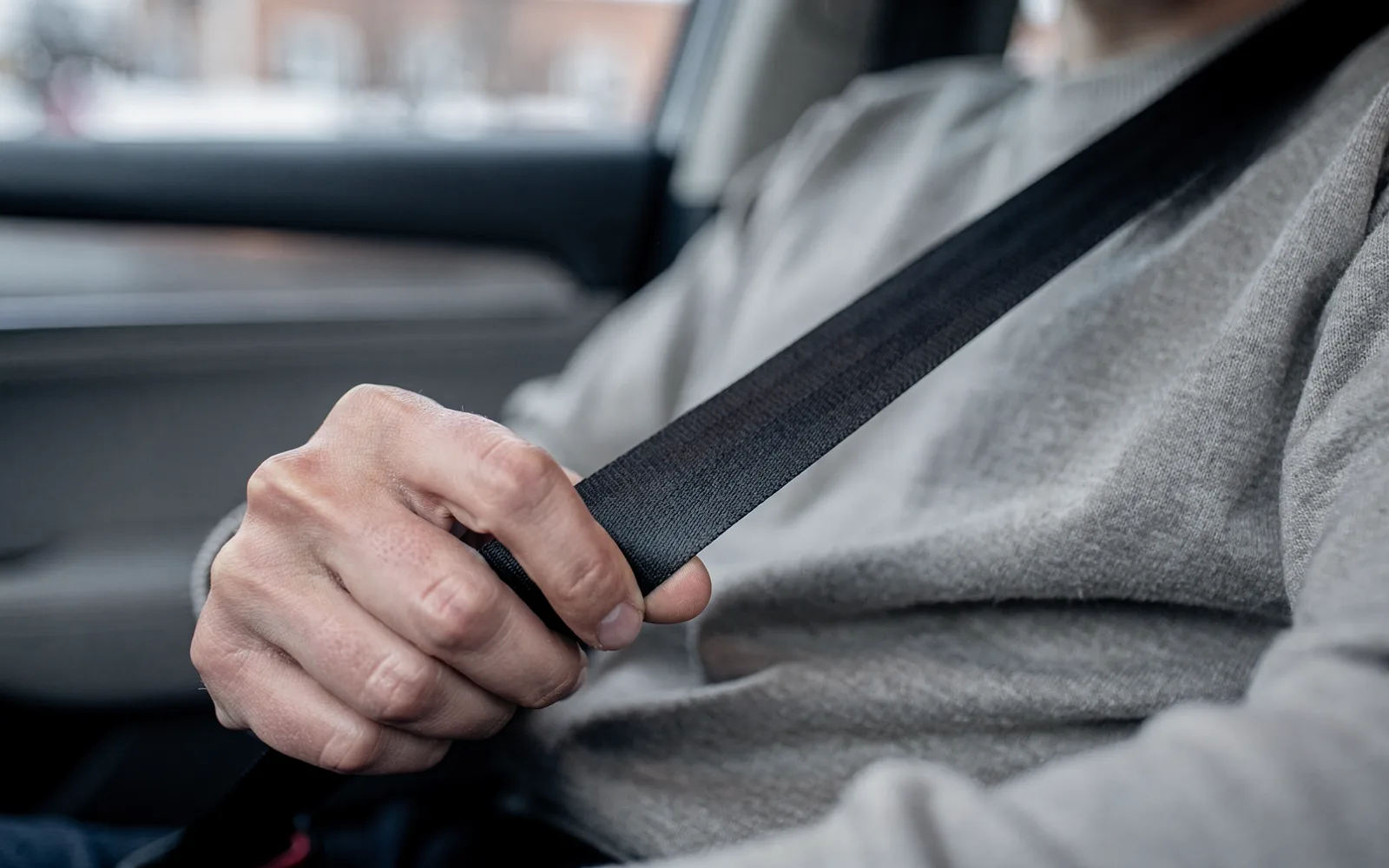
Illustrative image.
A quiet standard on every journey
Every time a driver or passenger climbs into an automobile today, a familiar click marks the beginning of the journey. The woven strap pulls smoothly across the chest and hips, locking firmly into place with minimal effort. This intuitive gesture is so deeply woven into the fabric of daily life that travelers rarely pause to consider where the concept originated or how it changed modern mobility.
Before the late nineteen-fifties, restraint systems inside passenger vehicles were rudimentary and rarely used by the public. Early options were typically simple two-point lap belts, which held passengers across the abdomen but left the upper body completely unsecured during sudden stops. Swedish automotive engineer Nils Bohlin recognized that travelers needed a balanced, comfortable solution that could safeguard both the torso and the pelvis simultaneously.
Working for Volvo, Bohlin spent months refining an elegant, interlocking geometry that could hold an occupant steady during rapid deceleration. His completed three-point seatbelt debuted in 1959, introducing a distinctive V-shaped arrangement anchored securely at three distinct points. The resulting apparatus was simple, effective, and remarkably easy for an individual to operate on any routine drive.
The geometry of human safety
The true brilliance of Bohlin's invention lay in its mechanical simplicity and human-centered design. Previous experiments with cross-chest harnesses involved complex buckles, multiple straps, and awkward adjustments that actively discouraged everyday use by ordinary motorists. Bohlin understood that a successful safety device had to be practical, intuitive, and quick enough for any driver to secure using just one hand.
His layout combined an adjustable lap belt and a diagonal sash into a single continuous strip of durable webbing. By anchoring the strap low beside the vehicle seat, the buckle ensured that physical forces were distributed across the strongest parts of the human skeleton, specifically the ribcage and the pelvic girdle. The belt kept occupants seated upright while effectively preventing torso rotation and slip.
The design also allowed reasonable freedom of movement during regular travel while securing immediately under sudden tension or change in momentum. Drivers retained full control of the steering wheel and pedals without feeling uncomfortably pinned down. This balance between physical ease and dependable protection transformed how automotive engineers approached the entire discipline of cabin architecture.
Opening the patent to the world
Recognizing the unique protective value of the invention, Volvo made an extraordinary choice shortly after filing the initial patent. Rather than retaining the three-point design as an exclusive commercial advantage, the company decided to open the patent to all rival manufacturers at no charge. Any automaker across the globe was invited to implement Bohlin's geometry without paying licensing fees or royalties.
The leadership at Volvo viewed the development not as a proprietary sales asset, but as an essential contribution to global road safety. By sharing the design openly, the company accelerated the universal adoption of protective restraints across the entire international automotive sector. Competitors quickly integrated the three-point system into their own production lines, making personal transportation safer on every continent.
This open-access mindset set a profound precedent in technological collaboration among industrial competitors. It demonstrated that engineering breakthroughs meant to protect human lives carry far greater worth when shared freely rather than kept behind closed commercial doors. The decision remains a classic, widely admired example of generous industrial stewardship and public care.
A lasting legacy of shared care
Decades after its introduction, the fundamental mechanics of the three-point seatbelt remain largely unchanged in modern vehicles. While modern belts incorporate sophisticated pre-tensioners, load limiters, and specialized high-tensile fibers, the underlying three-point geometry devised by Bohlin continues to serve as the core framework. It sits quietly beside the seats of almost every passenger vehicle manufactured across the globe today.
Automotive historians and engineering specialists consistently rank Bohlin's concept among the most significant transport innovations of the twentieth century. Millions of daily commutes, relaxed family road trips, and cross-country freight deliveries depend on this understated Swedish creation. Its presence is calm and unobtrusive, yet its protective value continues to guide vehicle development across the worldwide automotive industry.
The humble seatbelt stands as a lasting testament to what thoughtful design and broad cooperation can achieve together. By blending clever biomechanical insight with a commitment to communal benefit, Sweden offered the world an enduring gift of quiet security. It reminds modern travelers that sometimes the greatest innovations are the simple, shared ideas that watch over us each day.
Something not right? Write to desk@veltrixnews.com. Corrections are added openly at the end of the story. Read our editorial standards.