Uppsala's Linnaeus Garden and the man who named nature
In the historic university town of Uppsala, carefully tended flowerbeds and preserved countryside estates celebrate Carl Linnaeus, the botanist who brought lasting order to the natural world.
Illustrative image.
A universal language for the living world
In the historic center of Uppsala, a peaceful walled sanctuary invites visitors into the birthplace of modern scientific naming. It was here that Carl Linnaeus, who lived from 1707 to 1778, spent decades working as a prominent professor of botany and medicine at Uppsala University. During his influential career, he transformed how humanity understands and organizes the living world, turning natural history into a structured discipline. His tireless curiosity reshaped botany from an inconsistent hobby into an international science rooted in direct observation and careful recording.
Before Linnaeus introduced his groundbreaking reforms, European scholars faced enormous confusion when attempting to identify even common wild plants and animals. Naturalists relied on cumbersome Latin descriptions that could run several sentences long, with different authors inventing their own phrasing for the exact same species. Linnaeus solved this persistent problem by creating a universal system of two-part scientific names, known as binomial nomenclature. By pairing a genus name with a specific species epithet, he gave every living creature an enduring identity that researchers everywhere could readily understand.
Walking through the 1745 garden plan
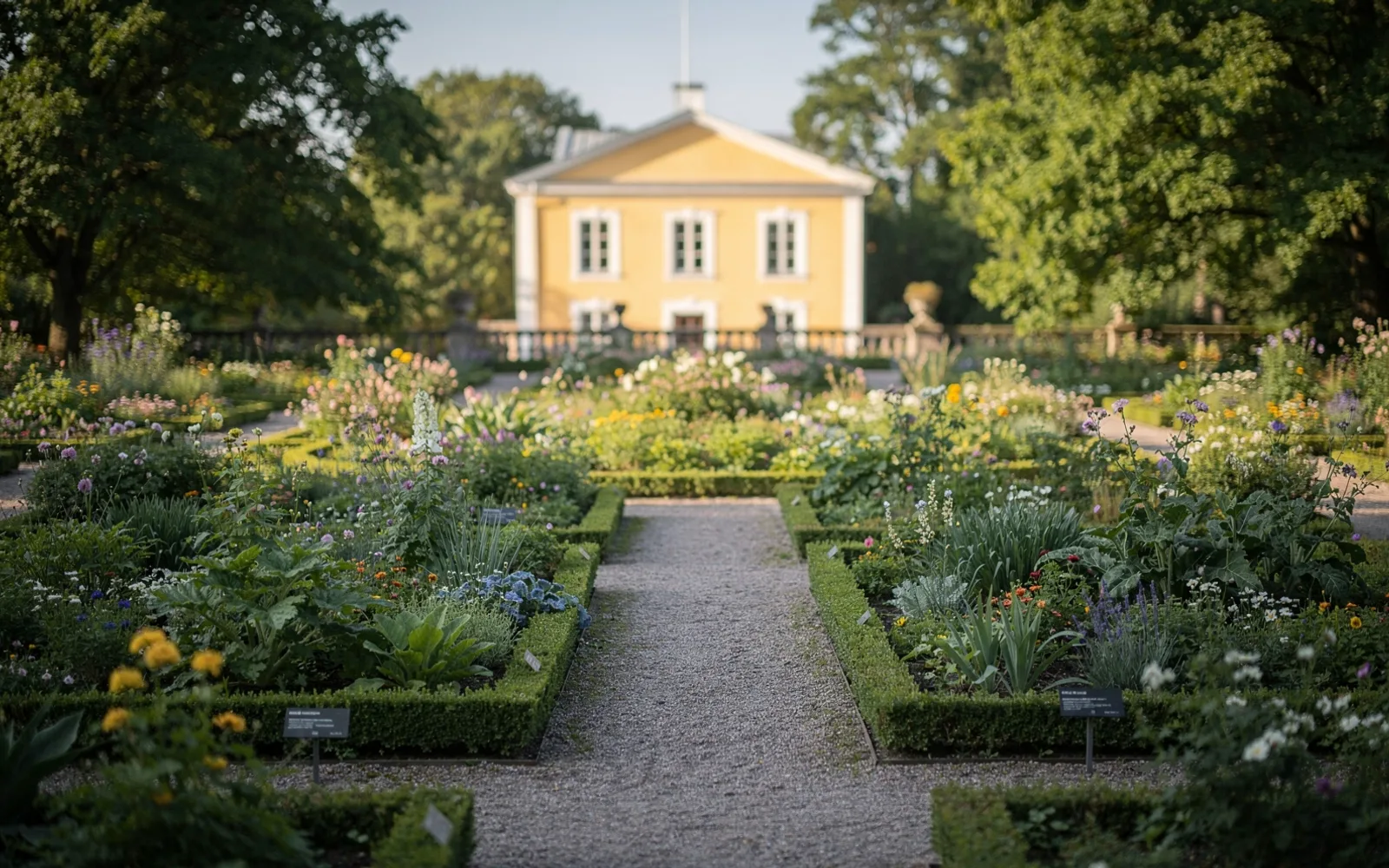
The practical heart of this intellectual revolution remains open to the public at the Linnaeus Garden in central Uppsala. During the early twentieth century, caretakers and historical researchers carefully restored the entire site according to the detailed plan that Linnaeus drew in 1745. Walking through the iron gates today reveals the original geometric layout that once served as an outdoor teaching laboratory for hundreds of university scholars. Every raised bed, gravel pathway, and border hedge reflects his systematic approach to categorizing the diversity of plant life.
The grounds feature thousands of carefully curated plant species, arranged precisely according to the floral classification system Linnaeus devised based on plant reproductive structures. Annuals, perennials, medicinal herbs, and edible crops grow in neat rows, accompanied by a graceful orangery that protected tender varieties from chilly Scandinavian winters. Strolling past these orderly beds feels like stepping directly into an eighteenth-century reference book brought into vibrant physical reality. The garden continues to serve as an active botanical space where historical heritage and natural beauty exist in quiet harmony.
Global voyages and botanical discoveries
Linnaeus recognized very early that creating a truly comprehensive catalog of nature required gathering specimens from every corner of the earth. To achieve this immense goal, the professor inspired his most promising university students to undertake perilous journeys across distant oceans. These eager young naturalists, often described as his apostles, volunteered for long voyages aboard trade vessels and exploration ships heading toward unfamiliar continents. Their shared mission was to observe local ecosystems, collect living seeds, and document species never before seen in European academic circles.
From the lush forests of North America and the windswept capes of southern Africa to remote islands in the Pacific, these researchers gathered thousands of botanical and zoological treasures. They dried pressed leaves between sheets of paper, sketched fragile blossoms, and carefully packaged durable seeds for the long voyage home to Sweden. When these shipments arrived safely in Uppsala, Linnaeus examined each dried specimen under his microscope, assigning them formal Latin names and integrating them into his expanding global registry.
A peaceful haven at Linnaeus' Hammarby
While his university garden in the center of Uppsala was dedicated to rigorous academic instruction, Linnaeus also sought a peaceful country retreat. In 1758, he purchased Hammarby, an attractive rural estate located a short carriage ride southeast of the city. Linnaeus' Hammarby became his beloved summer home, offering a quiet family haven where he could escape university administrative pressures and recharge amid gentle farmland. In this pastoral setting, he built a dedicated hilltop museum to store his expanding personal collections safely away from town fire hazards.
Today, Linnaeus' Hammarby stands as one of the most authentic and complete eighteenth-century homesteads preserved anywhere in northern Europe. The main wooden manor house still displays his personal books, family furnishings, and original walls papered with delicate botanical sketches that he used for daily inspiration. Surviving apple orchards, historic walking paths, and shaded woodland meadows continue to flourish around the property, welcoming travelers who appreciate natural history. Together with his restored city garden, this tranquil countryside estate honors a determined scholar whose practical naming system gave the natural world a shared global voice.
Something not right? Write to desk@veltrixnews.com. Corrections are added openly at the end of the story. Read our editorial standards.