Esrange: Sweden's rocket base above the Arctic Circle
Tucked into the quiet forests of northern Sweden, Esrange Space Center has spent decades helping researchers probe the upper atmosphere and communicate with orbiting satellites.
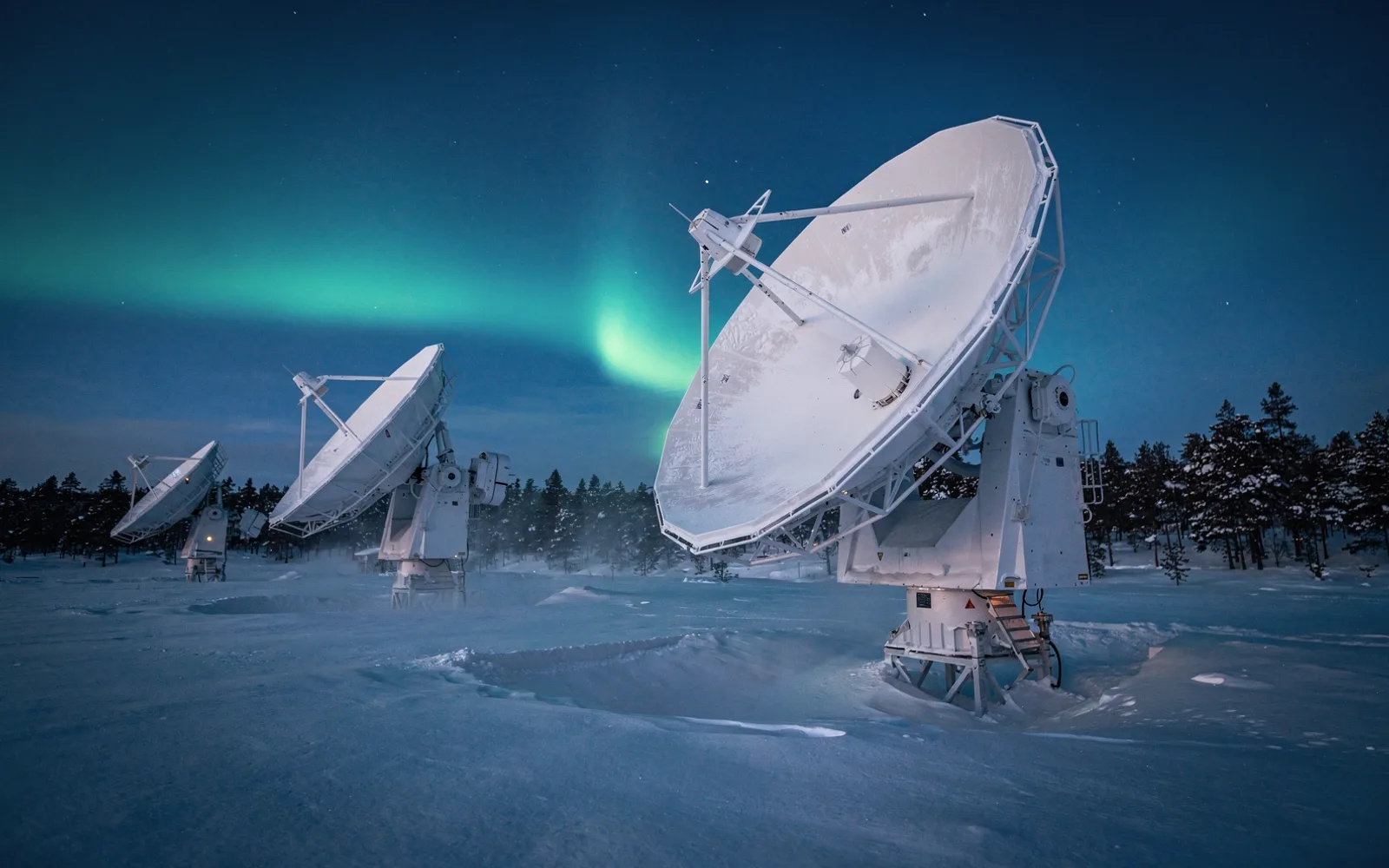
Illustrative image.
A quiet gateway to the sky
Deep in the subarctic landscape of Swedish Lapland, a short journey east from the city of Kiruna, sits an unexpected hub of European aerospace exploration. The Esrange Space Center stands surrounded by gentle birch ridges and dense pine forests, offering a serene natural backdrop to the advanced technological work taking place on the ground. Established in 1966, the facility has welcomed international researchers for decades, proving that groundbreaking scientific research can thrive in remote corners of the world.
The entire complex is managed and operated by the Swedish Space Corporation, commonly known as SSC. As one of the very few operational rocket launch sites located on mainland Europe, Esrange holds an essential place in international space research. While many people picture spaceports on sun-baked tropical shorelines, this Arctic base highlights the quiet advantages of clear northern skies and stable inland infrastructure. The location allows scientists from across the globe to conduct experiments that would be difficult to carry out anywhere else.
Probing the upper atmosphere
Rather than launching standard telecommunication satellites into permanent orbit, the scientific program at Esrange focuses heavily on sounding rockets. These slender, unguided vehicles propel delicate sensor packages straight up into the upper atmosphere before descending back to Earth, providing several minutes of almost pure weightlessness. This brief microgravity window allows university teams and independent researchers to test new materials, examine fluid behavior, and measure atmospheric conditions at a fraction of the cost of an orbital mission. Over the years, hundreds of these suborbital flights have contributed meaningful insights to basic physics and chemistry.
Along with its active rocket program, the facility is renowned for conducting large stratospheric balloon campaigns. These vast, helium-filled envelopes can lift scientific instrument gondolas weighing several tons high into the stratosphere, far above commercial flight lanes and weather disturbances. Drifting quietly across the polar sky for days at a time, the high-altitude platforms enable researchers to measure solar radiation, study atmospheric chemistry, and observe distant astronomical phenomena with extraordinary precision. The clean air and stable polar winds make the region an exceptionally favorable environment for this type of long-duration ballooning.
Space to touch back down
A primary reason for constructing a space center in northern Sweden is the remarkable landscape extending beyond the launch perimeter. Directly to the north lies a vast expanse of uninhabited land that covers thousands of square miles of forest, wetland, and rocky upland. This immense, open territory serves as an ideal impact and landing zone, ensuring that returning payloads and rocket boosters can parachute safely down without presenting hazards to populated towns. The sheer size of this controlled landing area remains unmatched elsewhere on the European mainland.
Once an airborne mission concludes, specialized recovery crews set out across the rugged terrain to retrieve the landed equipment and scientific data. During the summer, teams rely on helicopters to spot the bright parachutes and lift the heavy instrument packages from mossy ground. In the cold winter months, ground crews traverse the snowbound hills using tracked vehicles, swiftly returning the hardware to the base so that researchers can inspect their physical samples on the very day of the launch. This rapid retrieval capability is a major draw for scientists whose experiments require immediate post-flight laboratory analysis.
Connecting with distant orbits
Rocket and balloon launches represent only one dimension of the work carried out at Esrange. Over the decades, the site has developed into one of the most active civilian satellite ground stations in the world. Visitors to the base encounter expansive fields of large dish antennas, their white surfaces angled constantly upward as they maintain reliable communication links with spacecraft orbiting hundreds of miles above the planet. These dishes hum day and night in the crisp Arctic air, forming an invisible bridge between Earth and space.
Because the facility sits well above the Arctic Circle, it holds a natural advantage for communicating with satellites that travel in polar orbits. These spacecraft travel from pole to pole, passing over northern latitudes on almost every circle around the planet. Consequently, Esrange can receive telemetry and downlinked data multiple times each day, delivering crucial information on weather patterns, ocean currents, and global environmental shifts to scientists across the world. In this way, Sweden's quiet northern base continues to play an indispensable part in helping humanity understand our living Earth.
Something not right? Write to desk@veltrixnews.com. Corrections are added openly at the end of the story. Read our editorial standards.