Semla: the cream bun that marks the end of winter
Filled with rich almond paste and clouds of whipped cream, this fragrant cardamom pastry heralds lighter days across Sweden while honoring centuries of seasonal baking tradition.
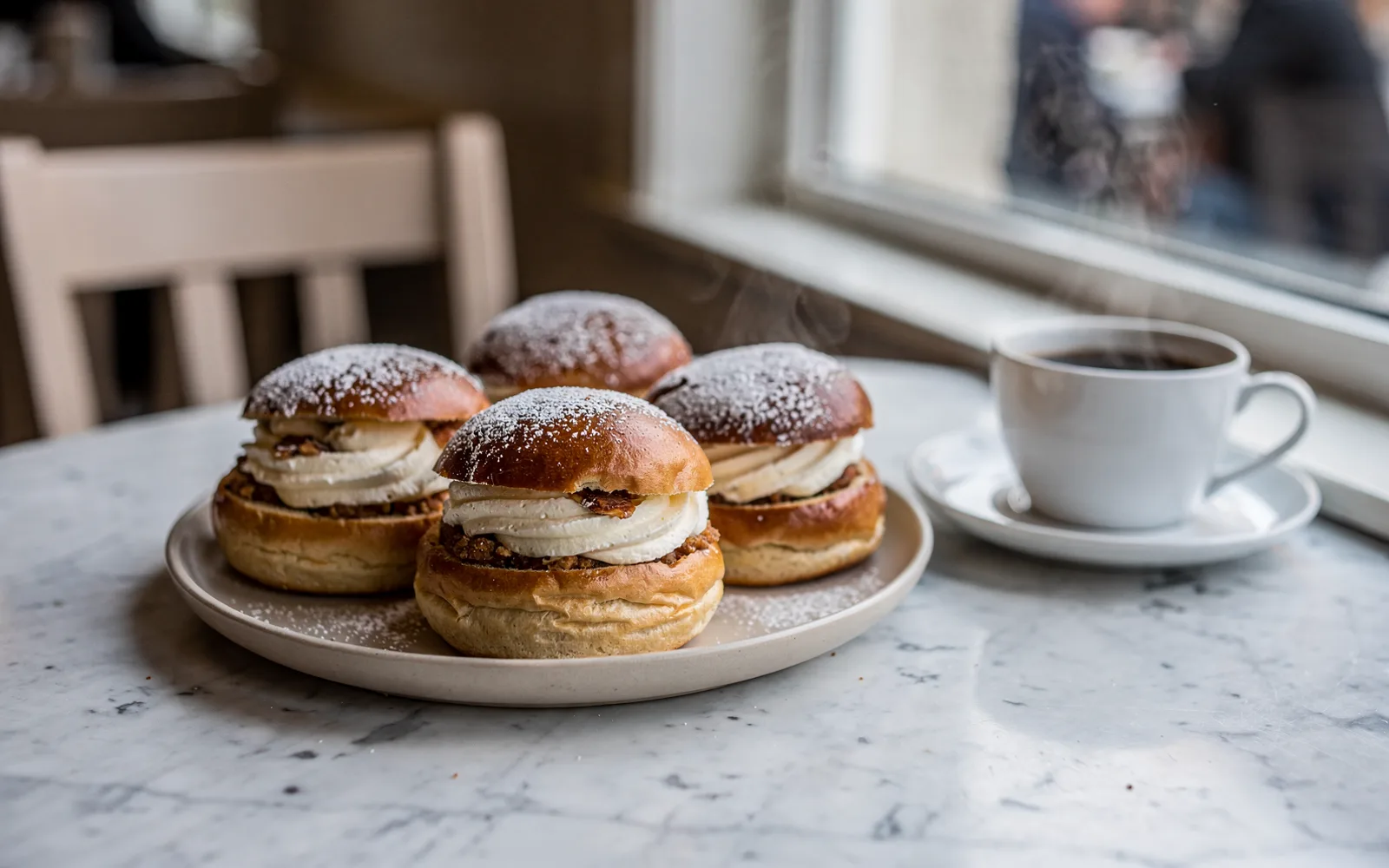
Illustrative image.
A seasonal sign of spring
As daylight slowly begins to return to the northern latitudes, Swedish bakeries fill their display cases with a pastry that signals the turning of the season. The semla is an airy wheat bun infused with freshly crushed cardamom, sliced open near the top to cradle a generous layer of almond paste and a cloud of whipped dairy cream. A light dusting of powdered sugar over the triangular pastry lid finishes the treat with a pristine winter flourish. For many people, catching the first glimpse of these golden buns in a shop window marks the emotional threshold where deep winter starts giving way to early spring.
Stepping into a neighborhood bakery on a brisk morning means encountering the welcoming aroma of warm yeast and toasted spices. The semla achieves its distinctive character through simple, harmonious contrasts in both texture and flavor. Ground cardamom seeds provide a citrusy warmth that balances the richness of the sweet cream, while the dense almond filling anchors the pillowy softness of the bread. It is an artful composition that feels celebratory yet unpretentious, made to be savored during the quiet pauses of the day.
From Fat Tuesday to winter staple
The pastry carries deep historical roots linked to Fettisdagen, known in English as Fat Tuesday. In earlier centuries, this festive bake was prepared as a hearty final indulgence before the quiet weeks of late winter. Households relied on the rare luxury of refined white flour, churned butter, and thick dairy to mark a joyful communal meal before seasonal supplies grew scarce. The bun offered both physical nourishment and high spirits during what was traditionally the leanest and darkest stretch of the year.
Over generations, the culinary custom shifted from a single feast day into an extended seasonal ritual that spans several months. Today, bakeries start rolling out fresh trays of buns shortly after the December holidays conclude, and enthusiasm remains steady well into late winter. Millions of semlor are enjoyed across Sweden every year, demonstrating how an old calendar milestone transformed into a beloved cultural habit. The long season gives people a comforting, familiar treat to share with friends, family, and colleagues during the coldest weeks.
The ritual of hetvägg
While most people today pick up a semla with their fingers or eat it with a small pastry fork, an older serving method remains deeply cherished. Known as hetvägg, this traditional presentation places the entire pastry inside a shallow porcelain bowl filled with warm milk. The steaming liquid gently softens the spiced bread from below, gradually blending with the almond paste beneath the cool whipped cream. The result is a comforting hybrid of warm bread pudding and sweet soup that provides instant warmth after a walk in the snow.
Hetvägg represents one of the earliest recorded ways to consume the bun, originating during a period when hard wheat rolls were routinely soaked in warm broth or milk to make them tender. A pinch of ground cinnamon was often added to the warm milk to enhance the fragrant aroma of the dish. Even in modern cafes and family dining rooms, enthusiasts continue to request or prepare this heritage style. It honors a slower way of dining, encouraging diners to sit down with a soup spoon and appreciate every layer of flavor.
Tradition meets modern invention
In recent years, creative bakers across Sweden have embraced the semla as a playful canvas for seasonal invention. Modern pastry shops regularly debut imaginative variations, translating the familiar flavor profile of cardamom, almond, and cream into entirely new formats. Curious customers have encountered semla wraps, crunchy cookies, flaky croissants, and delicate waffles inspired by the classic bun. These inventive interpretations generate friendly curiosity and lively conversations across the country, prompting people of all ages to compare their bakery finds throughout the season.
Despite the colorful wave of culinary experiments that arrives each winter, the classic cardamom bun with almond paste remains the unchallenged favorite. The enduring appeal lies in its reliable craftsmanship and the nostalgic comfort it brings to winter afternoons. Enjoying a semla is fundamentally about pausing to appreciate good baking and the gradual return of daylight. As snow begins to melt from city streets and forest paths, this humble cream bun continues to stand as a sweet, optimistic reminder of spring.
Something not right? Write to desk@veltrixnews.com. Corrections are added openly at the end of the story. Read our editorial standards.