Knäckebröd, the crispbread with a hole in the middle
Baked from hearty rye flour for centuries, traditional Swedish crispbread with its central hole reflects clever historic storage habits and remains a beloved everyday staple.
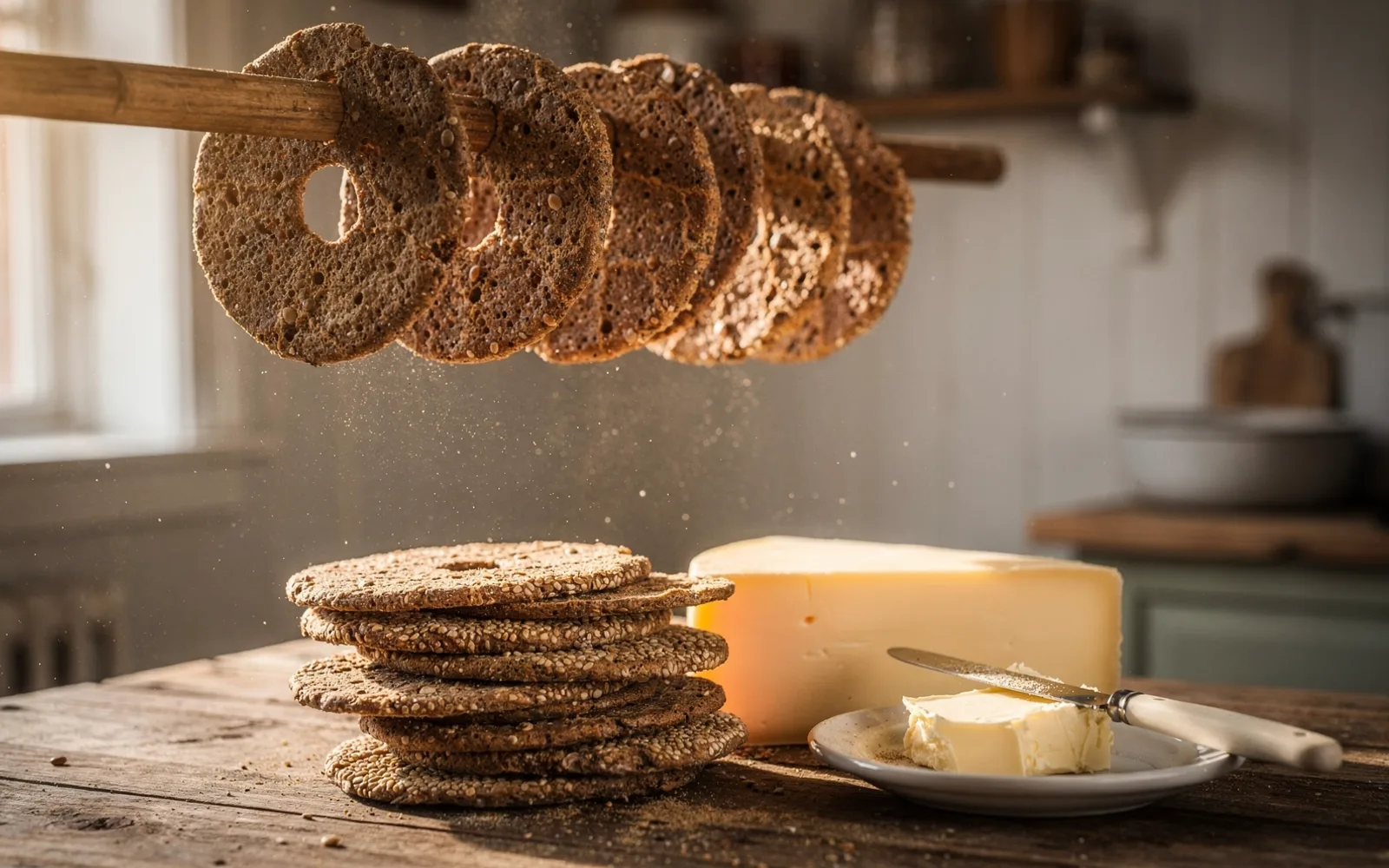
Illustrative image.
A pantry staple with ancient roots
Knäckebröd, the sturdy crispbread baked across Sweden, represents one of the country's most enduring culinary traditions. For centuries, households relied on this simple bake to provide dependable sustenance through long, cold winters. Made primarily from robust rye flour, water, yeast, and salt, the dough was rolled thin and baked quickly at high heat. The result was a dry, fragrant bread that resisted spoiling and could nourish a family for months.
Today, crispbread remains an indispensable fixture in Swedish homes, workplaces, and school cafeterias. Walk into any grocery store and you will find an entire aisle dedicated to vast wheels and neatly packed rectangles of crispbread. While modern bakeries now offer varieties spiced with seeds or different grains, the classic rye version continues to set the standard for everyday meals. Its pleasant crunch and toasted flavor provide an ideal foundation for both simple toppings and hearty spreads.
What began as a practical solution to rural food preservation has evolved into a quiet symbol of Swedish domestic life. Crispbread bridges generations, connecting contemporary kitchens with the resourceful farming communities of the distant past. It represents an understated food culture where humble ingredients, patient craft, and thoughtful preparation come together in a dependable daily ritual.
Suspended near the rafters
The classic round shape of knäckebröd, complete with a clean circular hole in the center, was born out of practical necessity. In earlier centuries, rural homes lacked modern pantries and airtight containers. Damp floorboards and hungry rodents posed constant threats to baked goods stored at ground level.
Country bakers solved this storage dilemma by looking upward toward the warmth of the ceiling. After taking the large rounds of crispbread from wood-fired ovens, they threaded them onto long wooden poles suspended horizontally above the hearth. In the dry, warm air near the rafters, the bread cured thoroughly and remained safe from pests and moisture.
This overhead system allowed households to bake enormous batches of bread only once or twice a year, often in autumn and early spring. Whenever someone needed food, they simply slid a round of crispbread off the hanging pole and brought it to the table. Even though modern packaging has replaced wooden poles, traditional bakeries still punch out that iconic center hole as a tribute to historic ingenuity.
From morning butter to evening soup
Crispbread plays a versatile role in daily dining routines, fitting comfortably into breakfast, lunch, afternoon breaks, and dinner. The simplest way to enjoy it is with a generous layer of salted butter, allowing the dairy richness to balance the earthy grain. Many Swedes prefer to spread butter on the uneven, dimpled side of the cracker, creating tiny pockets of richness that melt on the tongue.
Beyond butter, mild or aged hard cheeses are classic partners for crispbread, often sliced thin with a traditional wire cheese plane. Sliced boiled eggs, fresh cucumber rounds, and fresh herbs also make regular appearances on morning boards. For an unmistakable taste of Swedish comfort, many reach for a tube of smoked cod roe spread, known widely as Kalles kaviar, creating a savory and salty combination.
Crispbread is equally comfortable serving as a humble accompaniment to warm evening meals. It frequently sits beside steaming bowls of yellow pea soup, vegetable stews, or plates of pickled herring and potatoes. Its firm texture holds up against hot broth, offering a satisfying crunch that soft sandwich bread cannot match.
Enduring simplicity for modern tables
The continuing success of knäckebröd lies in its honest, unpretentious character. In an era filled with fleeting food trends, this ancient bread relies on minimal ingredients and straightforward baking techniques. Rye flour brings not only a deep flavor, but also a dense structure that keeps people satisfied long after a meal has ended.
Because crispbread contains almost no moisture after baking, it retains its fresh taste and firm texture for an exceptionally long shelf life without needing artificial preservatives. A packet tucked away in a cupboard, summer cottage, or backpack remains crisp and dependable for months on end. It is ready at a moment's notice whenever unexpected guests arrive or when busy days leave little time for cooking.
As food lovers around the world embrace rustic grains and durable staples, knäckebröd stands out as an inspiring example of practical design. It reminds us that everyday food does not require complexity to bring comfort and connection. With its distinctive crunch and storied past, Sweden's famous bread with a hole in the middle continues to hold a proud place on the modern table.
Something not right? Write to desk@veltrixnews.com. Corrections are added openly at the end of the story. Read our editorial standards.