The Dala horse: how a carved toy became Sweden's symbol
Originating in the quiet timber cabins of central Sweden, the brightly painted wooden horse has grown from a humble fireside craft into an internationally cherished national emblem.
Illustrative image.
Carved beside the winter hearth
The story of the Dala horse begins in the dense pine forests of Dalarna, a central Swedish province long celebrated for its deep craft heritage. During the cold months of the year, forest workers spent weeks living in simple log cabins far from their home villages. Evenings were long and dark after exhausting days of felling timber, leaving the men with quiet hours to fill around the warmth of the open fire.
Using scraps of pine left over from the day, workers began whittling small wooden figures with simple hand knives. The horse was a natural and beloved choice of subject, serving as an indispensable partner in the woods that hauled heavy logs through deep snow. These small carvings were initially brought home as gifts for children, offering warmth and cheer to households during the long northern winter.
A village tradition takes root
Over time, the pastime grew into a recognized cottage trade that sustained many families during agricultural downtimes. The village of Nusnäs, nestled on the shores of Lake Siljan near Mora, gradually became the true heart of this living tradition. Two well-known family workshops established there, Grannas A. Olsson and Nils Olsson, helped secure the reputation of Nusnäs as the primary home of the craft.
Brothers and neighbors shared carving techniques and paint recipes, turning the quiet settlement into a hub of artisanal skill. While the production eventually organized into small workshops, the essential methods remained grounded in manual dexterity and respect for natural materials. Generations of craftspeople have continued to work side by side in Nusnäs, preserving the original techniques while keeping the regional identity vibrant.
The rhythm of carving and painting
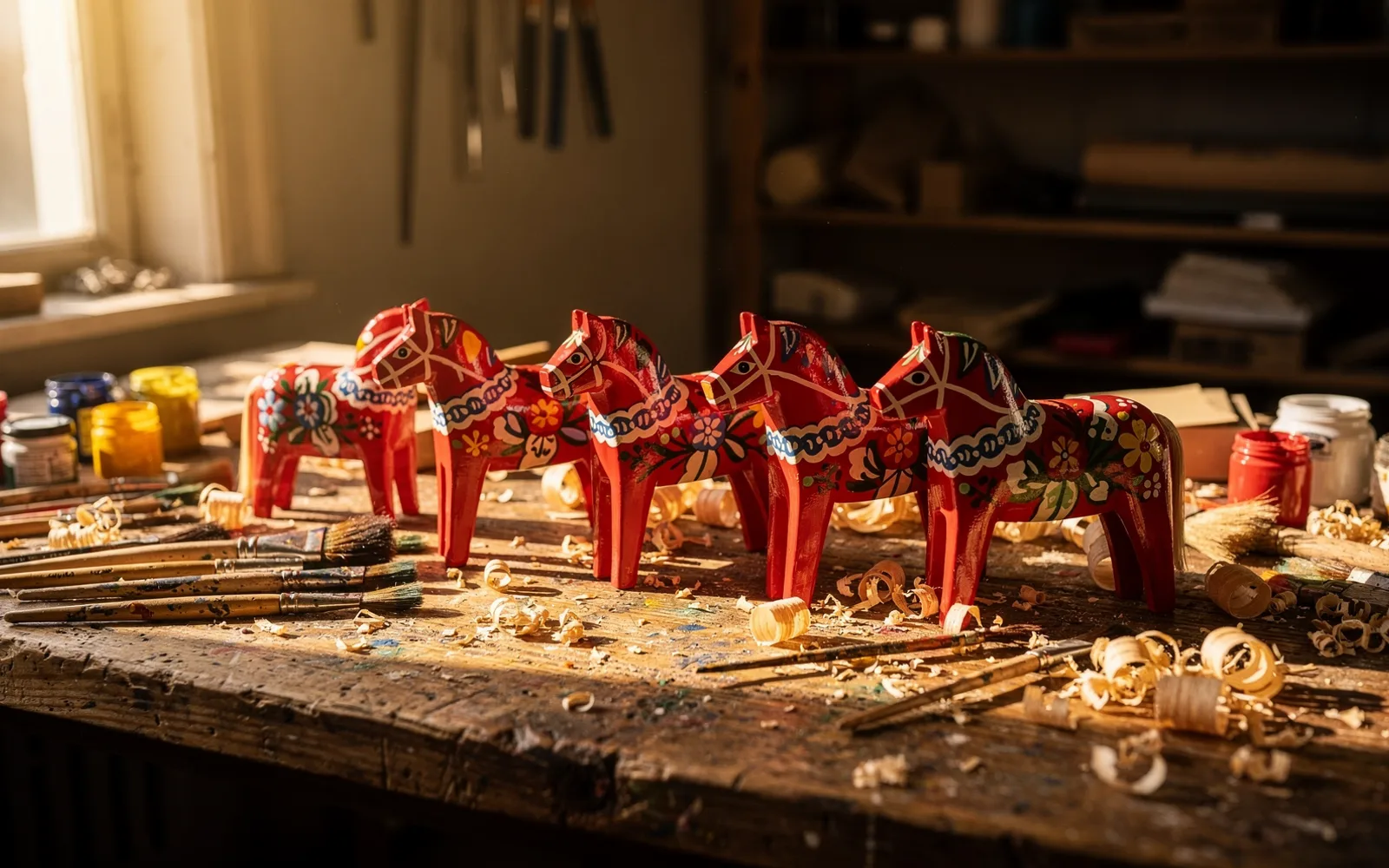
Every traditional Dala horse passes through a meticulous, hands-on process that begins with carefully selected local timber. First, woodworkers saw the rough outlines of the horses out of smooth pine planks, taking special care to work around the grain. Skilled carvers then shape each individual piece by hand using very sharp woodcarving knives, shaving away facets until the familiar rounded form emerges.
Once shaped, the wooden horses are dipped into base paint, which is most famously a bright and cheerful red, though other shades exist. After drying, painters apply the distinctive floral flourishes known across Sweden as kurbits patterns. These stylized, sweeping strokes of two-toned paint require years of practice to master, as each painter holds two colors on a single brush to create the flowing, decorative saddle and harness details completely freehand.
From rural cabins to the world stage
Although the dalahäst was deeply cherished within central Sweden for generations, its international journey truly gathered momentum in the early twentieth century. A defining moment arrived at the 1939 New York World's Fair, where Swedish organizers chose to place a giant, brightly painted Dala horse outside the Swedish pavilion. The striking figure captured the imagination of thousands of visitors from across the globe, introducing international audiences to the cheerful craft.
Today, the dalahäst stands as one of the most recognizable cultural icons of Sweden, yet it has never lost touch with its humble origins. Visitors who wander into the workshops of Nusnäs can still hear the quiet sound of wood shavings falling to the floor and smell the fresh scent of pine and linseed oil. It remains a timeless reminder of how patience, simple tools, and fireside creativity can turn a modest wooden toy into an enduring symbol of a nation.
Something not right? Write to desk@veltrixnews.com. Corrections are added openly at the end of the story. Read our editorial standards.